
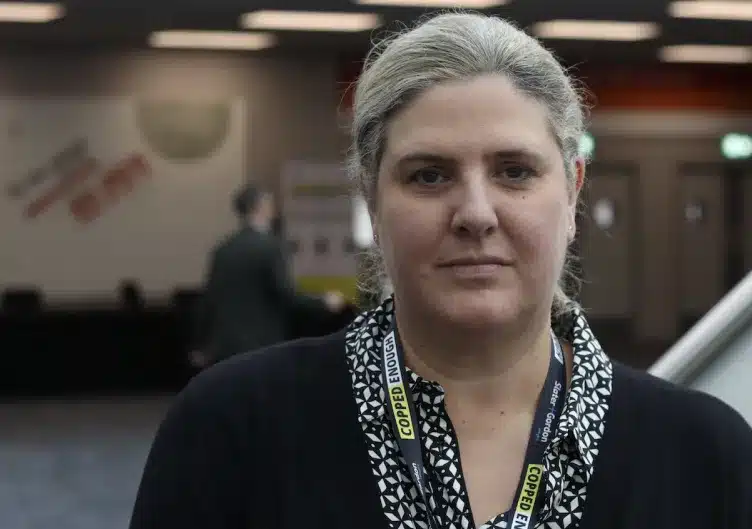
Branch chair Liz Groom has reacted to the Government’s blueprint for a major overhaul of policing by highlighting the need for frontline voices to be included in any reform.
A White Paper titled ‘From local to national: a new model for policing’ was announced by Home Secretary Shabana Mahmood and was described as the largest reform of the profession in two centuries.
Among the headline changes contained in the White Paper are the merging of forces, a licence to practice for all officers and significant investment in technology.
The plans will aim to strengthen neighbourhood policing, boost national capability against serious and complex crime, save money and streamline resources.
While recognising these objectives and the need for substantial change in policing, Liz argued any blueprint must incorporate the views of the Federation and its members.
“This proposal is clearly a significant moment in our profession and would fundamentally change how we operate in a number of ways. We know that reform is needed because officers and staff are under increasing strain, and the public deserves the best possible service to be delivered to them,” Liz said.
“But it is vital these changes are made with the right focus, and the only way to do that is to listen to the officers and staff themselves.
“I’m not sure the plans within this White Paper are conscious enough of that – there are elements in there which do not feel considered, thought through or explained with enough clarity.”
Questioning the idea of officer licensing, Liz continued: “I think there are multiple issues with this proposal. A licence to practice will require investment in training and support, but officers are constantly pulled away from training to fill gaps elsewhere, so that raises another area in need of investment to ensure those gaps are filled in the first place.
“Beyond practicalities, we know there is a culture within policing which often makes our members feel guilty for being away from frontline duties to complete training – would a licence to practice solidify that culture further?
“It’s unclear whether officers would be expected to fund the licence themselves, which would not be welcome with the amount of financial pressure already placed on a workforce paid inadequately.
“At present, I think the Government should be very careful about introducing something that could have such a big impact on individual officers across the country, without speaking to those it will affect.”
Liz also urged caution around merger proposals that would see 43 forces across England and Wales dramatically reduced.
The White Paper revealed plans to create a National Police Service, which would centralise many areas and departments of policing, including serious and complex crime, forensics and counterterrorism.
“There are aspects of the job which will always need local inputs, and many officers and staff will naturally feel loyal to their force, but that shouldn’t mean we are shut off to the idea that it might work better if some crime is of national responsibility.
“The problem, however, is that we cannot risk losing connections to local communities or weakening local accountability among the police.
“Until I see convincing evidence that we would gain more than we would lose with such a huge overhaul, I would be reluctant to give it full endorsement.
“We may end up creating gaps rather than fixing them, and while financial savings are mentioned, it’s unclear where those efficiencies would come from – beyond potential reductions through redundancies, in which we would risk losing talented officers anyway.”
Liz welcomed some of the ambitions set out in the White Paper, such as national targets of response times within 15 minutes in cities and 20 minutes in rural areas for serious incidents, but stressed the importance of looking after workers on the frontline in order to deliver on such aims.
She said: “If we want to improve response times, we need to have better funding. This is the only way we will have enough officers to do this, especially in Cambridgeshire, where we are one of the lowest-funded areas in the country and a fast-growing county.
“Our rural areas are vast, and cities and towns are growing more than many, so for us to realistically achieve faster response times, we need more resources. Not only for the benefit of the public but to ensure the safety of our officers isn’t compromised, and our officers aren’t burnt out.”
Discussing the need for reform to focus on officer welfare and mental health, she said she would like to see her Federation members given better support before the Government places even more demands on their output.
“Policing puts officers under sustained pressure and regular exposure to trauma as it is, so any changes must pay attention to mental and emotional health if they want to be realised.
“A good start would be a legal requirement for policing to record every suicide and attempted suicide among officers, so we can get a better picture of the true scale of this issue.
“At present, I don’t get the sense this is an overwhelming priority of the White Paper – perhaps because there are too many unanswered questions, but then the onus is on the Government to answer these before we can truly get behind it.”
“As a Federation, we have a responsibility to speak to our members, understand their views, and represent their concerns. Reform must be shaped with those voices at its core.”